
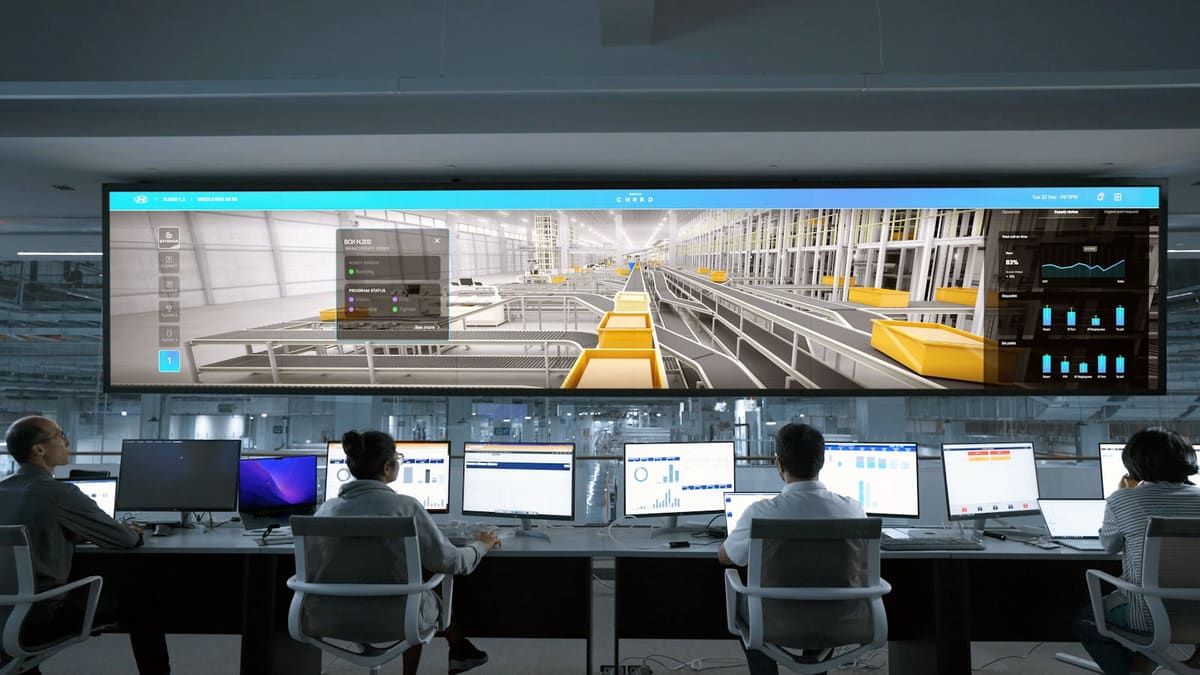
When a commercial building has 10 systems running in parallel — HVAC, lighting, access control, elevators, pumps, generators, fire alarm, CCTV, visitor management, electrical metering — and none of them talk to the others, you don't have a smart building. You have 10 silos burning energy, generating manual work and hiding problems until they become emergencies.
The BMS — Building Management System — is the layer that connects everything, supervises everything, and turns that chaos into a single system one person can operate from one screen. In 2026 it's no longer a Class A luxury: it's the difference between a building that operates with margin and one that bleeds money everywhere.
What is a BMS?
A BMS is the central supervision and control platform for a building's technical systems. It connects sensors, actuators, controllers and field equipment via open standard protocols — BACnet, Modbus, M-Bus, SNMP, KNX, DALI — and presents them as one system with one interface.
It's not office software. It's control infrastructure: a layered architecture with dedicated controllers per subsystem (DDC), an integration layer (gateway/middleware) and a supervision layer (SCADA or BMS frontend) where the operator sees and runs everything.
What does a well-designed BMS integrate?
HVAC: chillers, air handlers, VAV boxes, valves, temperature/CO₂/humidity sensors. Occupancy rules, dynamic setpoints, free cooling. This is where a BMS saves the most — typically 15–30% of electrical consumption.
Lighting: integration with DALI or KNX for scenes, occupancy-based dimming, daylight harvesting, scheduling by zone and time.
Energy: electrical meters (BACnet/Modbus), tenant or floor submetering, peak demand monitoring, alerts on spikes. Critical for LEED/WELL/EDGE buildings and for tenant billing.
Access control: integration with smart locks, readers, turnstiles. Access events trigger scenes (lights on, climate active, elevator ready).
Fire detection and life safety: system status monitoring, alarms, BMS integration for coordinated HVAC shutdown during an event.
Elevators and pumps: status, faults, operating hours, predictive maintenance.
CCTV and electronic security: intrusion event triggers lights + recording + notification.
Why it matters to your operation
Total visibility on one screen. One operator sees the entire building. A chiller fault isn't discovered when the tenant complains — it's discovered when the BMS alerts.
Predictive maintenance instead of reactive. The BMS logs operating hours, cycles, vibration, temperature. It warns before equipment fails. Shifts the model from "fix when broken" to "intervene before". Typically reduces unplanned downtime by 40–60%.
Reporting and auditability. For certifications (LEED, WELL, EDGE), management reporting, tenant billing by actual consumption, justification of investments. A building without a BMS has no data — and without data there are no informed decisions.
Quantifiable energy efficiency. Not theory: continuous consumption measurement, identification of wasteful zones, optimization by actual occupancy. Documented average savings in commercial projects with well-designed BMS range from 15 to 30% of total energy cost.
Operation with leaner staffing. One operator supervises what used to require physical rounds by 3 people. It doesn't replace the technical team — it frees them from repetitive tasks to focus on intervention and improvement.
Who is a BMS for?
Office buildings (from ~3,000 m²): energy ROI alone pays for the system in 18–36 months.
Hotels: integration of HVAC + lighting + room control + occupancy + check-in/out. Clear differentiator in experience and operations.
Hospitals and clinics: operating rooms with controlled pressure and temperature, negative pressure in isolation rooms, continuous monitoring of critical equipment.
Shopping centers: scheduled electrical demand, zoned climate, promotion events with coordinated lighting/ambient changes.
LEED/WELL/EDGE buildings: certification practically requires BMS monitoring to credit consumption and control.
Light industry / data centers / labs: monitoring of UPS, generators, racks, technical rooms. Here the BMS stops being efficiency and becomes operational continuity.
Why choose BMS over distributed control without supervision?
Without a BMS, each subsystem has its own manufacturer's "panel". Your HVAC tech goes into the HVAC panel. The lighting tech goes into another. No one sees the whole. No one correlates. When a problem hits, the information is spread across 5 screens and no one knows what happened first.
A BMS consolidates that. One timeline, one view, one event log. When the chiller failed at 3:42 AM and the server room temperature rose 4° in 12 minutes, you know exactly what happened — and the BMS already requested maintenance, alerted the operator and activated backup.
How we do it at DiraSmart
Our approach is open BMS over standards: we don't marry you to a brand, we don't lock you into a proprietary cloud, we don't charge annual per-device licenses. We design over BACnet, Modbus, KNX, DALI and consolidate into a supervision platform that lives inside the building.
Design from the drawings: we define control points, network topology, list of integrable equipment and commissioning plan before pulling cable. Everything documented in as-built drawings.
Phased rollout: you can start with HVAC + electrical metering (the fastest ROI) and grow toward lighting, access and the rest. No additional major construction.
Training and operation: we deliver not only the system but the team trained to operate it. Continuous support with real SLAs.
Conclusion
A commercial building without a BMS operates with its eyes closed. It pays for energy it doesn't need, discovers failures after the damage, can't certify anything, and depends on tribal knowledge of 2 technicians who take the "how" with them when they leave.
A BMS isn't an expense — it's the difference between managing a building and operating it professionally. If you're building or renovating commercial property in Panama, let's talk before you close the electrical and mechanical phase: that's where the opportunity lives to do it right for a fraction of what it costs to add later.