
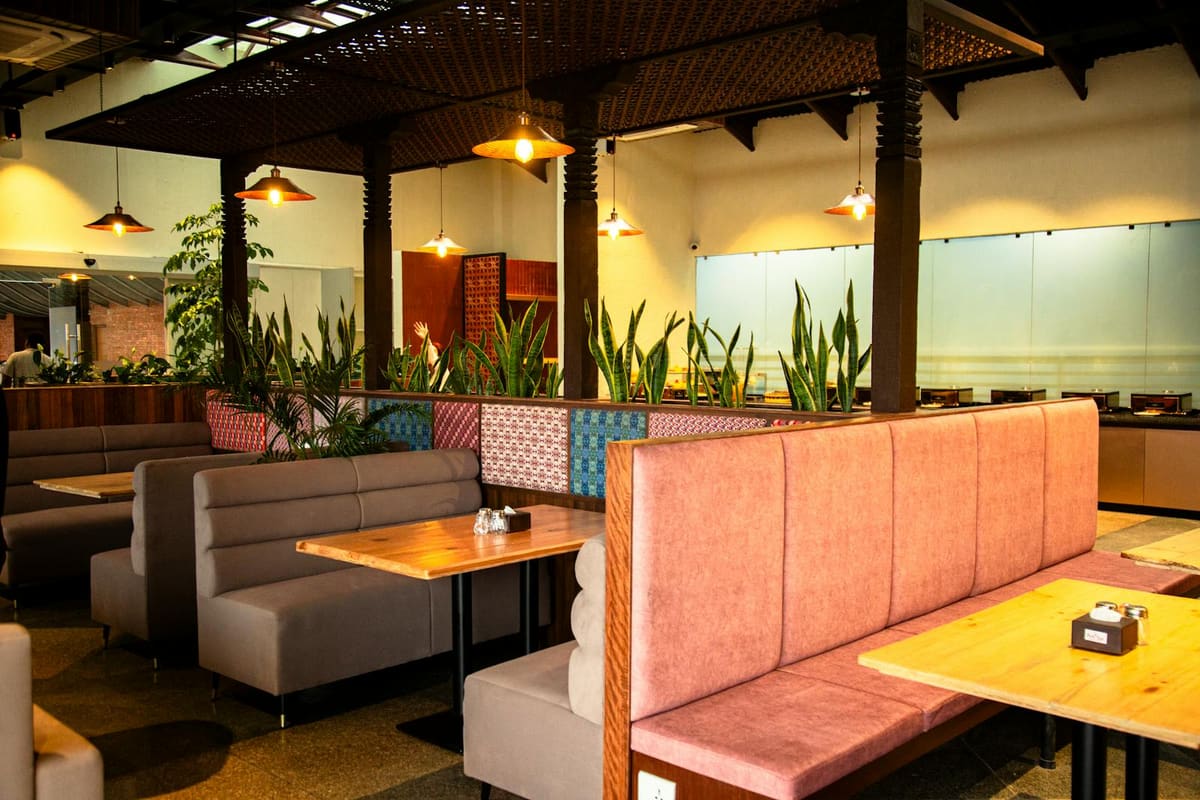
When we talk about commercial automation, people think of hotels and office towers. But most businesses in Panama are premises of 100 to 600 square meters: a restaurant, a gym, a clinic. They have the same oversized air-conditioning bill, the same "someone left everything on" problem, and mid-range budgets. This guide covers what gets automated in each type of premises, with examples from real operations.
Restaurants: scenes per shift
A restaurant lives in shifts, and each shift has its own atmosphere. Automation turns that into a button:
- Opening. At prep time, kitchen and storage lights at 100%, dining room at 40%, AC running to reach temperature before the first customer.
- Lunch. Full dining-room light, background music at low volume, AC at service temperature.
- Dinner. Warm lights at 50%, music at another volume, terrace lit at dusk with a light sensor.
- Closing. Everything shuts down in sequence, except cameras and refrigeration. If someone forgets the kitchen extraction or the private room's AC, the system switches it off at closing time.
Independent music zones (bar, dining room, terrace), AC control per area (the private room is not cooled without a reservation) and temperature monitoring in walk-in coolers with a phone alert if it goes out of range. That last point alone can prevent losing a full inventory in one night.
Gyms: schedules and occupancy
A gym opens early, closes late and has very sharp occupancy peaks. Automating means the premises adapt to those peaks without the manager touching anything:
- Lighting per zone. Cardio, weights and class rooms on separate circuits. The spinning room lights up with the class and switches off when it ends, instead of staying lit all day.
- Smart climate. Temperature and CO2 sensors in each zone: when the class room fills up, the AC ramps up; when it empties, it eases off. Without this, the AC works for 40 people even when there are 4.
- Music per room with volume scheduled by time of day.
- Access. Integration with member access control: the door, locker-room lights and the relevant zone activate on entry.
- Night mode. Minimum consumption from closing to opening, with cameras armed.
A typical 400-square-meter gym spends more on air conditioning than on any other item outside payroll. Occupancy-based control is where the savings are.
Clinics and practices: precision and energy per consulting room
In a clinic the requirement changes: it is not about ambiance but precision, hygiene and cost control per consulting room.
- Lighting per room and procedure. Neutral light for consultation, high shadow-free light for procedures, with scenes per specialty.
- Energy per consulting room. Each room is cooled only during its clinic hours. A room that sees patients on Tuesdays and Thursdays should not consume on Mondays.
- Waiting room with climate and lighting by schedule and occupancy.
- Integration with appointments and access. The specialist's arrival activates their room; access to restricted areas (pharmacy, records) is logged.
- Equipment monitoring. Temperature of medication and vaccine refrigerators with immediate alerts.
What they have in common
All three share the same technical base: local processing (the business keeps operating even if the internet drops), open protocols (KNX for wired, Zigbee and Z-Wave for wireless), a single app for the owner and manager, and WhatsApp support. And they share the same budget range: premises with zoned automation are a mid-range project installed in weeks, not a hotel budget.
Where to start
In all three cases the first step is the same: air conditioning and lights by schedule and occupancy. That is where 80% of the savings are and it requires no change to the operation. Music, access and equipment monitoring come next. DiraSmart does the site visit free of charge, measures how the premises operate today and delivers a written proposal with what is worth automating first.