
When someone builds or remodels a high-end residence in Panama, this comparison comes up sooner or later. Control4, Crestron and Savant are well-known American brands with dealers in the region and very polished catalogs. KNX is a European standard, not a brand. That difference in nature, brand versus standard, explains almost everything else.
The architecture difference
Control4, Crestron and Savant run on a central processor. Every switch, sensor and touchscreen reports to that box, and the box decides what to do. It is a powerful, well-engineered design, but it has a consequence: if the processor fails, updates badly or loses support, the whole house stops at once.
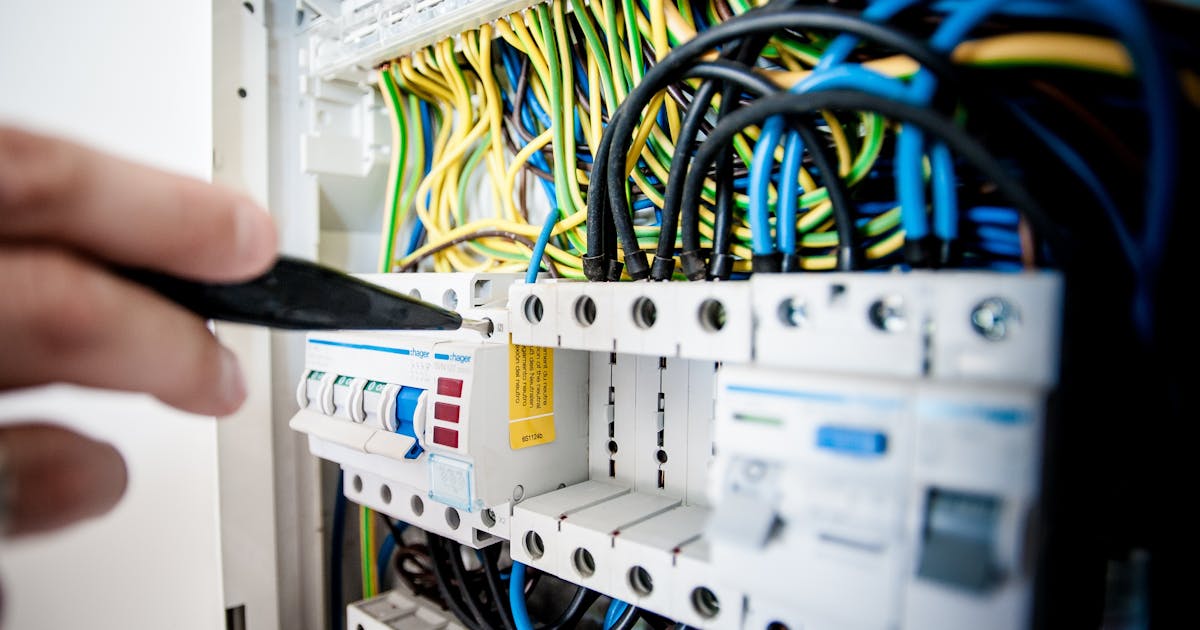
KNX is decentralized. There is no brain. Every actuator, sensor and touchscreen carries its own program and they talk to each other over a wired bus. If one device fails, only that function is affected: the rest of the house carries on exactly as before. A server can be added for visualization and the app, but the house works without it.
For a residence meant to last thirty years, this is the most important decision, far more than the design of the touchscreens.
Brand versus standard
Control4 belongs to Snap One. Crestron and Savant are private companies. Their equipment speaks proprietary protocols and is programmed with proprietary tools available only to authorized dealers. If the relationship with the dealer breaks or the brand changes course, your home depends on another dealer of the same brand showing up in Panama.
KNX is an open standard (ISO/IEC 14543-3) with over 30 years of history and more than 500 manufacturers competing with mutually compatible products: Gira, Jung, ABB, Basalte, Hager, Theben, MDT, Schneider, Siemens. Any certified KNX Partner, in Panama or in any country, can maintain and extend a KNX installation with the official ETS tool. You depend on no one in particular.
Where each one wins
In favor of Control4, Crestron and Savant:
- Very mature high-end audio and video integration (home cinema, video distribution, TV control).
- Very uniform user interfaces: everything looks and feels the same.
- A large dealer network in the United States.
In favor of KNX:
- No single point of failure and no brand dependency.
- Building-grade lighting, climate and blinds: the same standard used in hotels, airports and hospitals.
- Freedom to choose aesthetics: Basalte touchscreens, Gira or Jung keypads, Theben sensors, all on the same bus.
- Integration with DALI for architectural lighting and BACnet for whole buildings.
- Documented decades of service life; there are installations from the nineties running with new equipment on the same bus.
For audio and video, KNX pairs with specialized brands (Sonos, Basalte, Denon HEOS) without giving up the decentralized architecture for everything else.
And in Panama, what changes?
Three local factors weigh in:
1. Climate and the power grid. Power fluctuations and storms hit systems with a central processor harder, because that unit becomes the vulnerable point. KNX spreads the risk.
2. Support. In Panama, the number of dealers for each American brand is small. With KNX, any certified KNX Partner can take over the installation. DiraSmart is one of the few certified in the country.
3. The internet. Outages and latency are part of life in many areas. KNX needs no internet for anything essential, and with local processing neither does the app.
Our honest recommendation
If your priority is a reference home cinema and you have a trusted dealer for life, Control4, Crestron or Savant are legitimate options. If your priority is a home that works year after year, without depending on a brand or a single box, and you want to choose touchscreens and finishes freely, KNX is the right decision. It is the one we make for residences at the drawing or shell stage, and the same one made in five-star hotels.
If your home is already built and you will not open walls, neither applies: there the answer is a mid-range wireless system with local processing, which is what we install in most apartments in Panama.